It will be the plants we use in our own gardens that determine what nature will be like in 50 years. - Douglas Tallamy
Since 2001, our mission has been to provide the plants that will help you create spaces that nourish your spirit, mind, and body, and have a positive impact on our fragile planet.
NATIVE plants for spring 2026. This list does not include ferns, as most are still breaking dormancy
Herbs (our standard offerings in spring)
Hot, Sweet and specialty Peppers
PLEASE NOTE; Pricing and sizes of plants are to be determined, and availability is subject to crop failure , sales, and other factors and these lists may not be up to date all the time. These lists may also be incomplete, as we occasionally leave off a species or selection due to low quantities or in error. Please ask if you are looking for something in particular.
Environmentally conscious growers since 2001, Shy Valley Farm offers a delightful assortment of herbs, heirloom and gourmet vegetable starts, and nursery propagated native plants. Owned and operated by the mother and son duo of Christy and Creighton Shivell, with generous assistance from Christy’s husband Philip and a core group of volunteers. We also have handcrafted pottery, soaps, and occasional offerings from our flower and vegetable gardens on site.
Our nursery focuses on wildlife friendly, low maintenance, and useful native plants, herbs, and heirloom tomatoes. We have a great assortment of plants for edible landscaping, habitat gardens, and restorative landscaping. We are just starting to put together an index of our plants here. Our favorite plants look beautiful, smell amazing, taste great, and contribute to our health and the health of our environment in some significant way. All of our plants are produced via eco friendly methods without chemical pesticides, recycling pots as long as possible, and we have been trying to shift toward peat free growing media but we are finding that very challenging. But we do eliminate peat from any mix where we can do so without compromising plant health. We grow many of our plants from seeds or genetic material gleaned from regional populations, as part of our ongoing effort to preserve and promote the biodiversity of our local and regional flora and fauna. We have a great core of loyal and appreciative customers who come from all over to purchase our plants, and who we appreciate very much. You make all our hard work worthwhile! We have been growing and selling plants every year since 1995, when we were starting pepper and tomato starts under lights in our 200 plus year old cabin! Our nursery officially became a business in 2001, and we have operated every year since. This is our 25th consecutive year in the horticulture business. Thank you to our customers for making this family farm possible, and for striving to make the world a brighter place by planting native plants, growing your own food and medicine, or just being a good human who likes to garden.
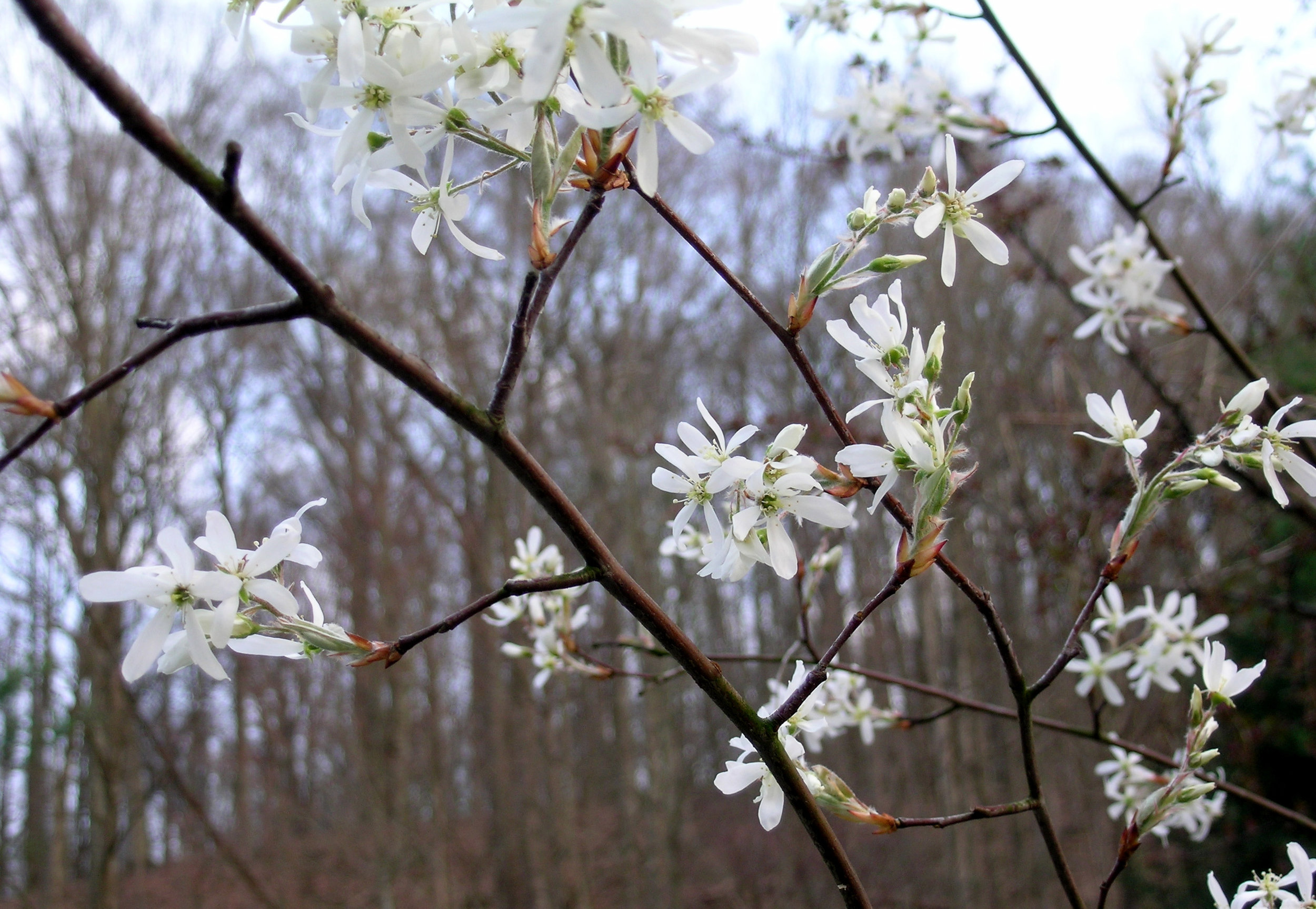
Note: All photos in the gallery below copyright Christy Shivell, with the exception of the lovely Serviceberry photo which was captured by Mary Silver and is used with his permission. All photos in the plant index by Christy Shivell unless otherwise noted.
reopening for Fall 2026 on August 15. From August 15 through October 30 our hours will be THursday-Saturday 10-2. Note we are closed on Saturday Oct 31.
Phone
423-276-3725 Creighton
(423) 348-6570 Christy
Location
315 Ridge Road, Fall Branch, TN 37656 (Not accessible when we are not open, please call, text, or check schedule. If you arrive at the nursery and the gate is closed please do not exit your vehicle or attempt to open or go around the gate. If the gate is open but you are there outside our posted hours, without an appointment, please Text or call 423/348-6570 or 423-276-1668) before driving past the gate.)
Please leave your pets at home or in your vehicle. Our ducks thank you!
open by appointment by texting 423/276-3725
Follow us on Facebook and Instagram at Shy Valley Farm.
shyvalleyfarmtn@gmail.com
We greatly appreciate your business, but please call or text before coming to see us unless you are visiting during posted hours.
Visit the Farm
Welcome to Shy Valley! We look forward to your visit with us.
Our Fall schedule begins August 15. Open hours beginning Saturday August 15 are Thursday- Saturday 10-2. If you would like to schedule a visit outside our regular operating hours for yourself or for a group, please text 423/276-3725.
Dogs must remain in your vehicle for their safety and the safety of our customers, ducks and chickens.
We accept cash, check, and credit cards (with a 3% processing fee). We do not accept PAYPAL.
Currently, there are no public restrooms on site. Please wear sturdy shoes. These two statements are not related.
When you arrive at 315 Ridge Road, please follow the gravel driveway straight back and around the greenhouses and back up to our parking area. Large trucks please park in other designated parking spots.
The nursery may close due to inclement weather. If the forecast is grim, please check social media or text before heading our way. 423/276-3725.
Please do not visit outside operating hours without an appointment. Our family members and volunteers often work alone in the nursery, and our several large dogs watch over us and keep us company. We all get startled when someone rolls through the gate unannounced. An open gate does not mean the nursery is open. Please adhere to signage for your safety, and the safety of us, our volunteers, and our pets. Thank you.


Educational Materials for gardening in the Appalachian Highlands region
Below is a list of topics of interest to many of our customers. If you click on the topic, a new window will open with a printable PDF file for your non-commercial use. Feel free to print and copy these files for educational purposes. Please do not alter the content in any way, and leave our contact information intact and visible when you reproduce these materials in any format.
If you need further assistance, we would be happy to help you in planning your next garden project.
Native Plants and Herbs for Bees, Butterflies, and Hummingbirds
Native Plants for Rain Gardens
Inviting Fireflies to Your Landscape
Attracting Hummingbirds to East Tennessee Gardens
Super Simple Pollinator Garden
Growing Culinary Herbs in East Tennessee Gardens
The Basics of Herb Gardening in Containers
Scented Geranium Care and Recipes
Cocktail Herb Recipes and TIps
Selected Delightful Herbs, Grouped by Size, includes herbs for shade
Getting to Know and Grow Garlic
Growing Peonies in the Mountain Empire
Growing and Using Figs, including Recipes and links
Terrarium and Moss Garden Care Instructions
Tomato Growing Tips for East Tennessee Gardeners
Newsletter Archive in progress. Come back later for more progress
First sent December 18, 2024 Holiday Edition 2024
This installment of the newsletter might find you in the midst of your holiday preparations, just as I am.  At the nursery, we are back to plunking away at our production , trying to do as much as we can ahead of schedule.  We are already wondering just how all the plants we want to grow this spring are going to fit in our greenhouses.

End of the year tasks include working out budgets and ordering supplies for next season.  We are excited to be transitioning to a peat free growing medium over the next few months.  You will still see peat in some of our plants next season, as we cant risk crop failures as we learn to grow in these new substrates that are primarily coconut coir based.  Why switch?  The number one reason is that peat is not a sustainable product and we would like to get away from it.  But also, we are always looking to improve our plant quality and we think we can do that by taking a more systematic, scientific approach to the growing media we use. We have opted to go with soils from Dirtcraft Living Soils in Marshall, NC.  It’s going to require a huge shift in how we grow and operate, but we think it will pay off in better plants and a healthier footprint.

Another big change coming soon will necessitate some clearing of a space in our field. (more to come on that project…) Ahead of that, I’ve begun cutting back the tall wildflower stems from the area and breaking them up to fill bug snugs throughout the vegetable garden.  These towers are full of hiding spaces where beneficial insects can overwinter.  They are more attractive than a brush pile and not much harder to build.

While I’ve been afield, I’ve also been gathering branches, acorn caps, and other sweet little findings to use in crafts we will be doing with the kids while they are out of school.

I hope they will enjoy the funtivities as much as I will.

Have a wonderful week.  Don’t forget to observe the Winter Solstice  on Saturday, the 21st,  After this shortest day of the year, the first day of winter, the days will grow a little longer bit by bit.  Here is a little seasonal folklore for your enjoyment, from Gather Victoria. (https://gathervictoria.com/2023/12/12/lutzelfrau-st-lucy-tarts-a-tale-of-winter-solstice-food-magic/)

Fondly, Christy


** Garden Project:  Bug Snug

Building an insect hideaway can be a satisfying afternoon project, especially with some eager children.

Start with three sturdy, relatively straight branches of whatever length you need to make a tower the size you want.  You are going to tie or wire these three sticks together at one point near the top, then spread the feet apart to make a three point tower.  I like to make the feet sharp with an angled cut so I can drive them into the ground a bit to secure the tower.  The taller the tower is, the more secure it needs to be. You can use any size branch really- make a mini tower with sticks 2 feet or shorter, or 4 feet long to make a pretty good sized one.

Once you have made the tower, fill it up from the base with bundles of twigs, stems, dried grasses, bark, mosses and whatever natural materials you have lying around that you feel need to be tidied. Don’t pack it too tightly.  You want to leave spaces for the critters you are trying to house. For a video that explains the process better than I ever could, click here. (https://thekidshouldseethis.com/post/how-and-why-to-make-a-bug-snug)

https://www.shyvalleyfarm.com

Herb Profile: Rosemary

Rosemary is one of the handful of basic herbs that no herb garden should be without.  The plants are robust, woody shrubs or prostrate groundcovers.  Highly aromatic leaves are laden flavor and with volatile oils that stimulate digestion, ease headaches, and can foster mental clarity, calm the nervous system, and enhance memory. The stems make excellent skewers for meats or vegetables, and the profusely borne, pretty blue flowers are also edible.

If you have been to the deep southern US, you have likely noticed large rosemary plants used throughout landscapes.  Here, you will occasionally see a large specimen, usually in an area where it gets protection from wind and cold in the winter.  Not all varieties can overwinter here, even with protection.  We have found that the most hardy varieties in our region are Salem, Arp, and a strain that we have been saving for many years that we call Appalachian Highlands Select or Eloise.  Other varieties, or seed grown rosemary, will likely not overwinter outside in our climate, but could be brought indoors for the winter. I know of no prostrate varieties that are hardy here.

Rosemary requires full sun to part shade, rich, well drained soil, and generally benefits from a little lime added to the soil at planting, but a soil test to make sure this is needed is best practice. The ideal pH for growing rosemary is 6.5 to 7.0, which in our area is a bit higher(more basic) than MOST soils here tend to be.

Rosemary does very well in containers, but definitely appreciates a bit of afternoon shade if growing in a pot. She does not like to be too wet, but also should never be allowed to get completely dry.  Let the surface of the potted soil dry between deep waterings and you should be fine.  Indoor plants benefit from misting or from increased humidity.

Rosemary is a perennial, and if you are lucky enough to have her overwinter in your location, she can grow into a lovely plant.  Her upright form is complemented well by low growing herbs such as thyme, alpine strawberries, creeping oregano, st. johns wort, and creeping comfrey.

Rosemary is wonderful fresh, but also dries well, simply curing on racks or hung to dry in your home.  The leaves may be frozen, or infused into alcohol, vinegar, oil, or honey.  This herb has a long and storied history of use that includes culinary, medicinal, and magical properties.  Folk wisdom tells us she protects from evil, warding off negative energy and promoting fidelity, among other attributes.

https://www.shyvalleyfarm.com


** Rosemary Recipes for the Holidays

** One huge benefit of growing rosemary is that you can harvest fresh leaves almost all year, including now.  Enjoy making these recipes, all of which make excellent gifts or additions to party tables.
Ina Garten’s Rosemary Roasted Cashews (https://www.foodnetwork.com/recipes/ina-garten/rosemary-roasted-cashews-recipe-1941586)

These have become a staple at our wreathmaking classes, thanks to our friend Jodi.  I have found that you can start with salted cashews if that’s all you can find, just cut way back on the salt that you add.  Click the title to go to the recipe.

Dave’s Pecan-Rosemary-Cheddar Buttons

another winner via Jodi, who got it from Jane…

Yield: 6 dozen

2 1/2 cups freshly shredded cheddar cheese

1/2 cup butter, softened

2 Tbsp half and half

1 tsp kosher salt

1 1/2 cups all purpose flour

2 cups chopped toasted pecans

1 Tbsp chopped fresh rosemary

Preheat oven to 350*.  Line a pastry sheet with parchment paper.  Beat cheese, butter, salt, and half and half at medium speed until blended.  Gradually add flour, pecans, and rosemary and beat until blended.  Turn dough onto a floured surface. Divide into 4 equal portions.  Flatten each into a disk and roll each disk to a 1/8 “ thickness.  Cut with a 2 inch round cutter, and place on prepared baking sheet, 1 inch apart. Bake for 15-18 minutes until golden.  Cool on baking sheets on wire racks 30 minutes.  Store  in an airtight container after completely cool.

Easy-ish Soft Caramels

1 lb dark brown sugar

1 cup butter

14 oz can sweetened condensed milk

1 cup corn syrup

1 1/2 tsp vanilla

1 tsp molasses

1/4 tsp salt

Optional:  If you want to infuse these caramels with rosemary or some other herb, add a generous sprig at the very beginning, and remove it when the mixture is approaching 200*F.  I do like the rosemary version, but I confess, I usually make these without as not everyone appreciates it.

Line an 8x8 or so metal dish with butter and waxed paper and set aside.  Add all the ingredients to a large pot and heat on medium to melt everything, stirring often.  Turn heat up to high and  begin stirring constantly. While cooking, keep the sides of your pot clean by scraping them down frequently.  Check the temperature of the mixture frequently with an accurate candy thermometer.  When the caramel reaches 236-240*F, quickly and carefully pour into the prepared dish.   Allow to cool 10 minutes or so and sprinkle lightly with flaky sea salt if desired, then continue to cool completely.  Turn from the dish onto a clean surface and cut into 1 inch squares.  Wrap each square in a bit of waxed paper and twist the ends to secure. One batch goes a long way and these look cute along with other treats in a gift box.


** Enjoy!
First sent December 7, 2024 Completing the CIrcle and Cranberry Cake
Well, this week has been a whirlwind of activity at the farm as we have been teaching our annual wreathmaking classes.  I started making wreaths on the old farm, before we even had children, so more than 30 years ago.  I would gather up armfuls of honeysuckle and twist them into  roundish shapes, then add whatever dried flowers and greenery I could find.  How I attached the greenery to the wreaths I do not remember, but I’ve a feeling that the technique involved a lot of tucking and weaving, and possibly hot glue.

Then I began to learn other methods, and eventually made my way to helping at the Exchange Place’s workshop, at the time taught by Judy Fox. I learned so much from Judy and the other volunteers and even enjoyed teaching there myself for several years.  When we started our own workshops at the farm during the thick of Covid, there were not many other group activities happening .  It was so nice being able to get together outside and do something that felt so normal.

Fast forward to this year and I’m still gathering greenery and fashioning it into little  circles.  An ancient symbol, wreaths are steeped in meaning. Protection.  Abundance.  Magic.  And it really does feel like magic when a group of us gathers in the greenhouse and one by one a dozen piles of greenery and twigs and seedpods take shape and come together into wreaths that each take their turn on the weathered greenhouse door to be plumped and admired before going to their homes.

After our last class, we will again have the farm to ourselves for a while.   Soon enough, the rush of preparing for spring will begin the circle of our year anew, but, just as in making a wreath, how you finish the year is every bit as important as all the other steps.  So during these quiet, cold and short days, we will be mindfully winding down the year by being in nature as much as possible, marking the solstice, celebrating Advent and Christmas, and wintering for a spell.  I hope you will have time to do the same in your own way.

Native Plant Profile: Aromatic Aster

A pillar group of plants for building habitat rich landscape is the Asters.  Providing high quality forage, usually late in the season, asters are superfoods and specialist bee plants.  There are several that are particularly well adapted to use in landscapes that need to look attractive and well kept throughout the year. Perhaps the very best is the Aromatic Aster.  This plant has it all; deer resistance, drought tolerance, multi season interest, and high aesthetic appeal.  For most of the summer, aromatic aster registers as a clean, tidy shrub, very useful toward the front of a border, especially in front of other plants that might get ragged after blooming, like milkweed.  In mid to late fall aromatic aster becomes a riot of color and life, as every inch of it is covered with purple/blue blooms, which are in turn buzzing with bees and other beneficials.  Seed grown individuals can be variable in their habits, but tend to be robust, spreading quickly via rhizomes.  They have not, in my
years of growing them, edged out other robust plants, but they will grow right up to them.  We grow one locally native strain that blooms very late, usually starting in early November.  We call this one “Carrlotta.”  “Raydon’s Favorite” is a cultivar that has proven to stay put, taking up about a 3x3 foot space.  It forms an irregular mound, which can, in richer soil, get a little untidy in year three. Avoid this issue by shearing back the plant by a third of its height in early May.  Bloom will be lush, and the habit tidy after this spring chopping..  If the material you are cutting back at that time is firm enough, you may be able to root it and create new plants. “Raydon’s Favorite” is pictured above, and  “Carlotta” below.
https://www.shyvalleyfarm.com


Recipe of the Week: Cranberry Christmas Cake (https://kitchenfunwithmy3sons.com/cranberry-christmas-cake/)

** I have made this cake many times and it never fails to please.  It is a great cake to take to potlucks or to put out in the breakroom.   It has a great texture, especially on the top, where it forms a delicate crust.  The bright white cake studded with red berries is very festive looking too!   The beating of the eggs with the sugar as instructed is crucial as they act as the leavening.  Vanilla is fine instead of almond extract for those with allergies.  I hope you love it.(Click here to go to the recipe.) (https://kitchenfunwithmy3sons.com/cranberry-christmas-cake/)

** Enjoy!
First sent November 27, 2024 Close Encounters and Granola
Yesterday I was presented with an “opportunity” to slow my schedule a bit and take a walk.  Having not heard back from my friend who I was counting on for transportation, and not wanting to actually call anyone who might be sleeping in that time of morning, I set off on foot from our fantastic mechanic’s place in Fall Branch proper to the farm.  It’s not a long walk, but I admit I don’t care for walking on that narrow road where people FLY.  (Don’t ask me how I know…)

Walking slowly past things that I drive by almost daily was a an unexpected treat.   I enjoyed a long conversation with an impressive and attentive buck, who now knows he has a regal presence, that the soul God gave him is pure, and that it is deer season and he needs to watch out for us humans more carefully.  Honestly, I could not believe how he stood and seemed to really listen to me for so long. That doesn’t happen to me often, let me tell you!   I was the one who eventually, awkwardly, walked away from the conversation, not he.

Along the way, I finally harvested the threadleaf bonset seed heads that I’ve had my eye on for some weeks.  They cleaned up beautifully using the lovely sieves Philip made for me a few years back.  If any of you native seed collectors would like to try them out, hit me up.  I’ll only collect a small seed tax and we can catch up while you use them.  They were relatively easy for me to ask Philip to make and they saved us a lot of money over buying a similar set.  (Philip will have to tell you how easy they actually were to build, though.)

I also found a wealth of two species of hickory nuts and some nice acorns to fill yet another planting box.  My pants pockets resembled full squirrel cheeks on my final leg of the journey.  Tree id from bark and nuts is a new frontier for me and I am loving the dive into these waters where I am still in over my head.   People ask me all the time how I have learned so much about plants.  This is how- slower than most but obsessively.

While prepping and sowing the nuts I felt such gratitude, and a sense of responsibility for this fragile yet resilient, struggling but surviving local ecosystem. I hope you have lots of things to feel grateful for this week, and get to enjoy time spent with family and friends.  Incidentally, I read recently that a great way to save money on Christmas gifts is to bring up politics at Thanksgiving.

Happy Giving Thanks-  Christy


Recipe of the Week: Granola

** This granola is made on repeat in our house.  I typically use it to  top my  basic at-work breakfast of yogurt and fruit .  A jar of this would make a great gift, especially coupled with a jar of homemade yogurt- which is also soooo easy to do.  When we get our classroom up and running I think I might do some easy cheese and dairy making classes there if you are interested.  This recipe is adapted to the point that it is truly mine.  I usually triple it for efficiency’s sake, and bake on a full sheet pan.

** Ingredients

2 cups uncooked  old fashioned oats

1/4 cup amaranth, 1/2 cup toasted quinoa*   (both optional but recommended to add protein, texture and flavor)

1 tsp cinnamon

1/4 tsp salt

3 Tbsp avocado oil

1/4 to 1/2 c sweetener-  honey, maple syrup, sorghum,  or brown sugar  in whatever combination pleases you

1 tsp vanilla

one egg white (Optional- using this will give you occasional clusters of oats- I don’t often do this as I don’t know how it effects storage life, but it is good)

1/3 cup almonds or pecans (in case of tree nut allergies, sub more pepitos here

1/3 cup pumpkin seeds (pepitos)

Instructions

Mix oats, grains, spices, salt, oil, vanilla, egg white (if using), and sweeteners well and spread onto a half sheet roasting pan lined with parchment.  Bake at 325*F for 10 minutes.  Lift and flip and add almonds or pecans.  Bake 5 minutes, lift and flip, and add pepitos.  Bake 10 more minutes.    Allow to cool completely,  stirring in the pan occasionally.  If you’d like to add a dried fruit, such as raisins, cranberries, cherries, or the like, stir them in to the cooled mixture, then use the parchment to funnel it into glass jars with lids to store.

*To make toasted quinoa, rinse the quinoa well, multiple times to remove the greasy coating, as you should before ever cooking and consuming this grain.  Lay the wet quinoa into a skillet and cook until dry. If adding to the granola, stop when the grain is dry and add it in with the oats at this stage. If toasting for other purposes, continue to cook until toasted.


** Enjoy!
First Sent November 20, 2024 Bluestar, Wreathmaking Workshops, and Pickled Peppers
Thank you all so much for the wonderful feedback you have been giving us about the newsletter. I enjoy putting it together and I am really excited about sharing more stories from the farm with you throughout the seasons. Writing the newsletter and coming up with ideas for future installments is kind of helping me to appreciate the things I get to do every day at our lovely little imperfect farm. This week we are finishing up the last of our fermentation. To be clear, this is not the yummy kind of fermentation that appeared last week in our recipe of the week, but, rather, the bubbly, disgusting soup that forms when you rot fruit to expose the seeds within. Passion fruit, Persimmon, and dogwood seeds have all been bubbling away in an array of 7-brew cups and yogurt containers. One by one, each group of seeds will be rinsed and strained to separate the clean seeds from the goop and from the detritus of stalks and caps and reluctant bits of skin that managed to hold shape despite the best efforts of a bacterial hoard. For these larger seeds, I have found that using the largest strainer size that will still contain the seed, will allow the gunk to move through the easiest, making it so much easier to wash the seed quickly. After the seed is clean. we sow or stratify it. Some seed will germinate after a period of cold followed by a period of warmth. These seeds may go directly to our outdoor boxes, or to a peat filled plastic bag in the refrigerator. Other seeds are more reluctant to sprout, and require a warm, moist period followed by a cold period, followed by yet another warm spell. These seeds will spend time on top of our water heater in an array of recycled zip lock bags or plastic food containers before also making their way into the refrigerator. Eventually, both groups will end up in pots or planting boxes somewhere warm and safe from seed eating critters. The work at the front end- gathering and preparing seed- make it incredibly exciting when the seedlings emerge and grow. Until next time- Christy
** Native Plant Profile: Bluestar
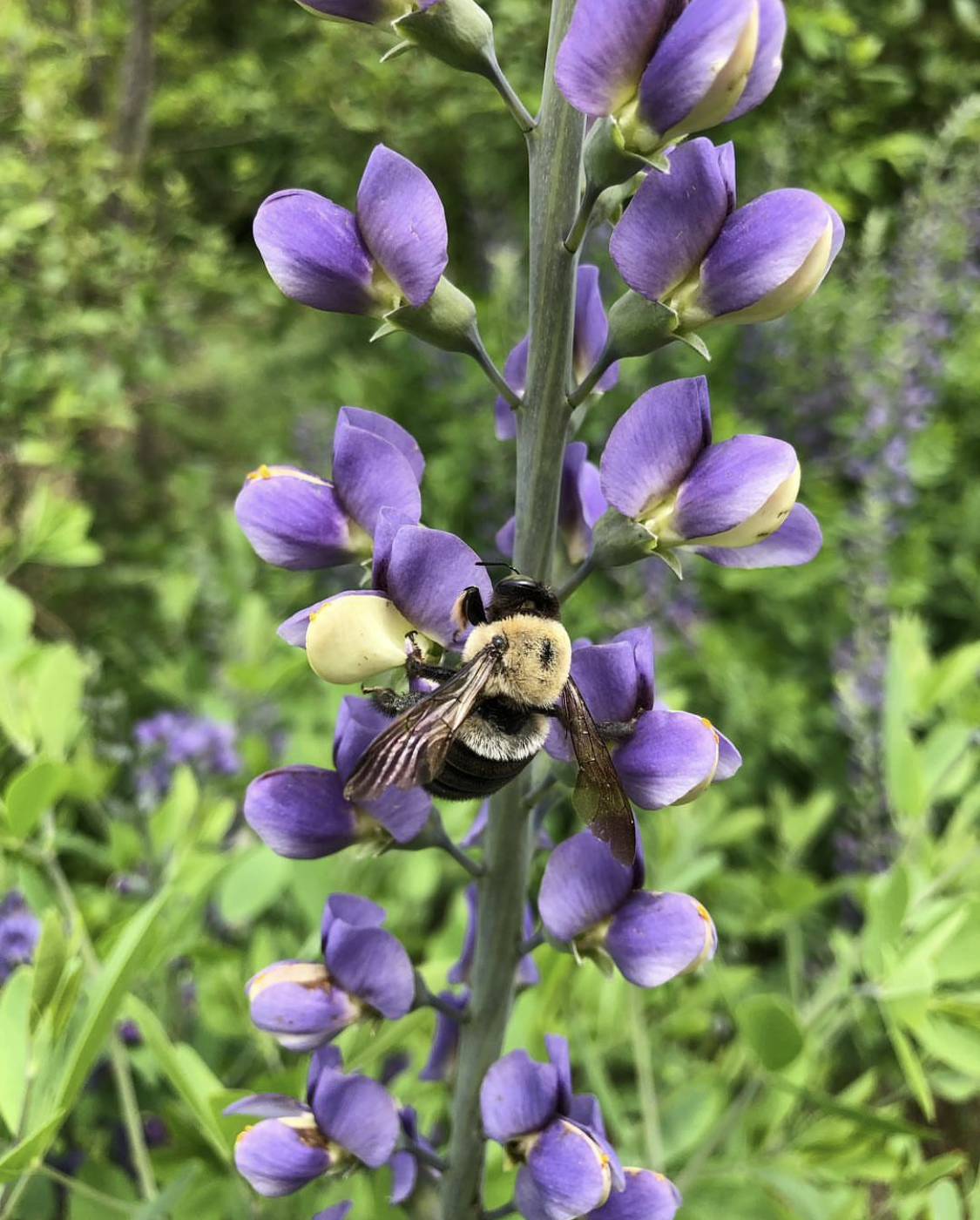
The Bluestars (Genus Amsonia) are a wonderful group of long lived perennials to incorporate into the native habitat garden. All have mid to late spring blooms in various shades from pale silvery to purplish blue. All have clean, beautiful foliage and upright forms that contribute to the pattern and texture of the landscape all season. Fall color is lovely in all the species, but some are outstanding. Each variety has a specific size, leaf form, and flower color that are unique to that type. All the Bluestars are frequented by Bumblebees. The variety pictured above is Blue Ice, growing 12-15 inches tall with darker flowers than most types. The one pictured directly below is the Eastern Bluestar, Amsonia tabernaemontana, species with wide, glossy leaves and a lovely form . The last plant pictured is the subspecies salicifolia, or the Willow leaved Bluestar. We grow several species and cultivated varieties. All are • deer resistant, • clay adapted, • disease free • produce attractive seed pods for winter interest • turn golden yellow in fall. The plants produce long, thin seed pods that are filled with neat rows of tiny cigar shaped seeds. They are fun to watch sprout because they are such large, beautiful seedlings. Amsonia is a genus in the Dogbane family, along with Asclepias ( the milkweeds). These plants tend to contain a milky sap that makes them unpalatable to deer, and the bluestars are no exception, In fact, I never see Bluestar marred by any deer or insect damage of any kind. Bluestar is a great plant to try in all its forms.
** Recipe of the Week ** Appalachian Fusion Pickled Peppers
** From here through Christmas, I’ll share recipes that could be used as gifts or as part of a spread of appetizers. I’m starting with this one because I know at least a few of you are picking your last peppers this week and may have a surplus of them on hand even as you read this. I have made these refrigerator pickles with hot peppers, but my favorite to use are Bishop’s Crown. The Bishop’s Crown peppers are usually mild with a touch of bite- similar to a pepperoncini. They are a beautiful shape, but that shape makes them a bit tedious to prepare. This recipe, however, is perfect, because you simply slice them into irregular rings and don’t worry about whether there are seeds clinging to them. They are fantastic pickled this way, and are great on charcuterie boards, sandwiches, and salads.
** Instructions: Slice specialty peppers into quarter inch wide rings and pack them into clean glass jars of an appropriate size. Don’t over pack. Add a smashed and peeled clove of garlic or two to each jar to your taste. Make enough brine to cover (will depend on your batch size). Heat up all the ingredients in a nonreactive pot until the sugar has dissolved. Basic brine ingredients 1 cup water 1 cup distilled 5% white vinegar (https://amzn.to/3QFiNkc) 1/4 cup granulated sugar (https://amzn.to/3QH1Iq5) 1 tablespoon sea salt (https://amzn.to/3UGxdSq) Allow the brine to cool before pouring over the peppers. Refrigerate. The peppers will be ready to eat the next day. ** Adapted from this Recipe by Vicky Pham (https://vickypham.com/blog/vietnamese-crunchy-pickled-jalapenos-ot-ngam-giam/) ------------------------------------------------------------ ** Enjoy! ------------------------------------------------------------
irst sent November 13, 2024 Fall arrives at the farm
* Greetings gentle gardeners!
------------------------------------------------------------

We’ve had rather a varied past few days.  Our mushroom logs, which are only 4 months shy of 2 years old, have begun fruiting at last.  We cut box elder logs in January,  a few weeks before inoculating them with one of two strains of oyster mushrooms.  We chose to do the oysters because we had a lot of box elders to remove, and it is a perfect host for these mushrooms.  I thought we might have somehow lost the oysters, because we have been getting wood ear mushrooms from the logs recently.  These are also an edible mushroom, and since we did not inoculate the logs with wood ear, it must have come from the wild.  But apparently, rather than taking over the logs completely, the wood ear is sharing the logs with oysters after all.

We love foraging for mushrooms, as well, but it will be nice to have  some close by, so I hope these will keep it up for a bit.

We’ve been gathering seeds and cuttings for propagation, including lots of natives, and a new to us fig variety.  Our new air pruning boxes are all full already and more will be on the way soon to give us room for the  seeds we will sow after they’ve spent time in the fridge.   We had to sow some seeds before the boxes were ready, and some of those are already popping up.  We’ve had to work hard to outsmart the mice who love to gobble up our seeds and seedlings this time of year, but we seem to have the upper hand on them for now.

The seeds and seed pods are all so varied and beautiful, and  seeing the little seedlings break the surface of the soil to seek out the light is thrilling every time.  Enjoy these photos of our process.

Until next time-  Christy


** Recipe of the Week
------------------------------------------------------------


** Honey Fermented Cranberries
------------------------------------------------------------


** From an online creator I really enjoy, “grow forage cook ferment”, this ferment is one I have just put together today.   Per the website, “These honey fermented cranberries are a healthy, colorful, and delicious fermented recipe that is perfect for your Thanksgiving or holiday dinner. Fermented honey cranberries are made from nourishing real food ingredients, and are a wonderful recipe for gut health.”
------------------------------------------------------------

I’m so glad I decided to share this recipe with you, because only now did I notice that she also includes some orange juice   I’ll have to go get an orange tomorrow and add that in!   I actually looked at a lot of recipes for these, as I’ve been wanting to make them for a long time and am just now getting to it.  Most of them do not call for the OJ, but it seems like a good idea, as the cranberries are so dry and the honey is quite thick


** For the recipe, click here to visit the Grow Forage Cook Ferment website, where you will also find many more wonderful ideas. (https://www.growforagecookferment.com/fermented-honey-cranberries/)
------------------------------------------------------------


** Enjoy!
------------------------------------------------------------

We are setting the dates for our wreathmaking workshops soon.     Text 423/348-6570 to have us add a time for your group.
First sent November 7, 2024 Botanical Mystery
Greetings gentle gardeners!
------------------------------------------------------------

One of my favorite things to do is to learn something new.  It is definitely one aspect of horticulture that keeps me interested and motivated enough that I’ve run a nursery this long.  There are always new plants to discover, new techniques and refinements to growing, gardening, cooking, and baking, and new challenges to work through using all the skills and experiences you’ve amassed over time.  Last week I got to learn an all new plant, and it is both an herb, a beautiful flower, and a food source.

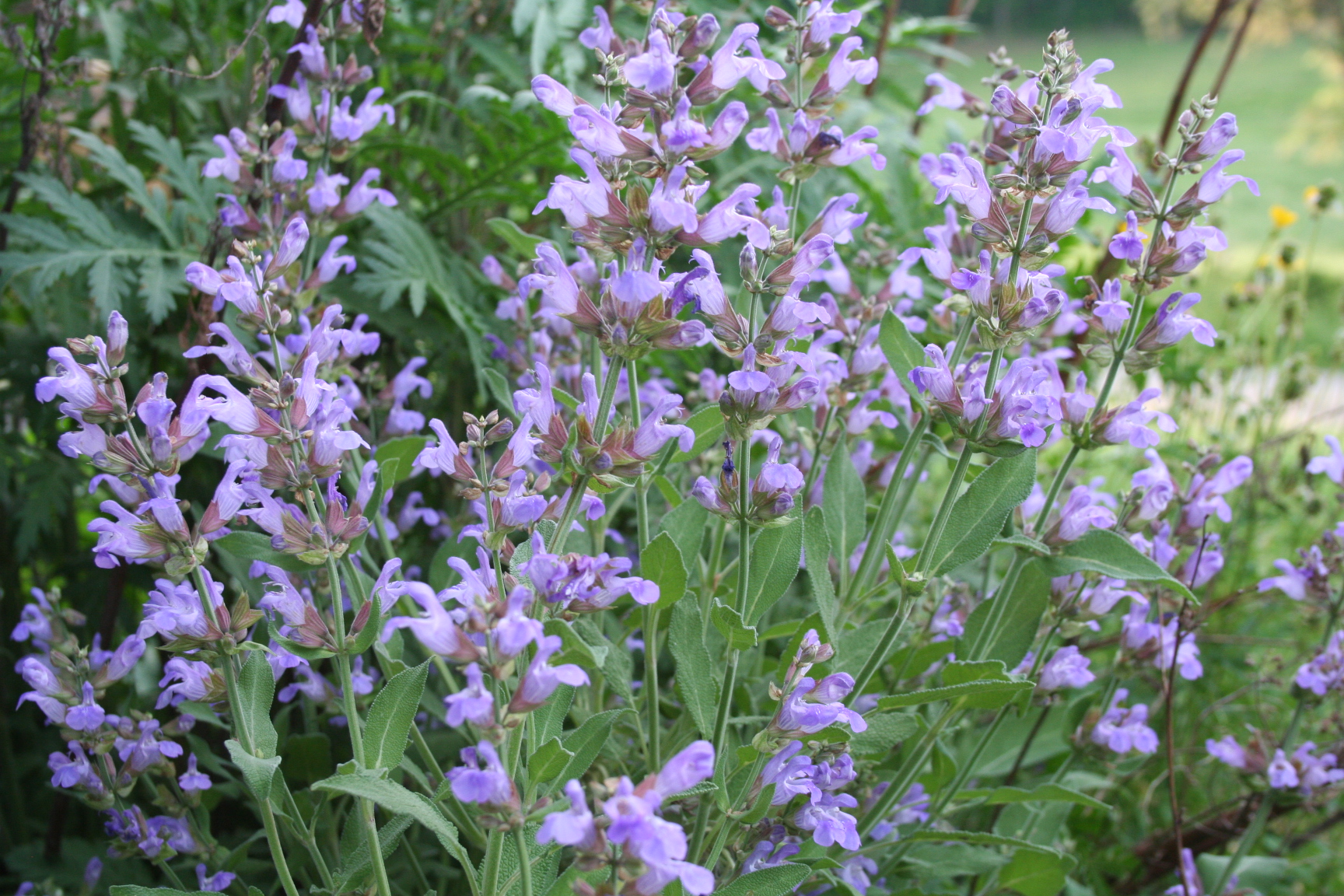
So, I noticed a brilliant blue bloom in a brushy area behind our herb spiral.  The plant was tall and shaggy enough that at first glance it resembled a weed that is common at the farm, but that blue bloom was not typical at all.  On closer inspection the flower was truly lovely, with a softly rounded edge on each blossom, all tightly stacked into an elegant spire.  The plant was highly aromatic, but the scent was new to me.  I could place the plant in the Salvia genus, as it had all the hallmarks of other sages, but the  species was new to me.  So, botanist that I am, I keyed it out meticulously.  Nah, just kidding, I google image searched it.  I almost could not believe what google told me, but after 2 minutes of research I came to the conclusion that this lovely, exotic mystery plant was indeed …


** CHIA!!!
------------------------------------------------------------

Who knew that chia seeds come from such a lovely plant?  In retrospect, the seed does look like a salvia seed, and the seed’s tendency to form a gelatinous coating when wet is reminiscent of another mint family member , Basil.  (Yes, the genus Salvia is in the mint family.)  But that similarity took me down another wormhole where I learned that “gelatinous exudates” from seeds are found across a broad spectrum of plants and is in no way limited to the mint family..

But back to chia, more formally known as Salvia hispanica. This frost sensitive tropical plant typically flowers toward the end of a long growing season, and its blooming is tied to short day length.  The chances of a direct sown plant blooming and possibly making seed in our climate is unlikely given that we have long day length summers and when our days do grow shorter, that change is accompanied by frost.  We have yet to have a good freeze here at the farm, so this year, this accidentally sown chia plant and a few of its friends are living their best lives.

The University of Kentucky has developed long day length chia varieties that make seed production possible in our region. I use a lot of chia seed and I can’t resist a blue flower, so I am excited to try  growing it intentionally next year. Glad to meet you, Chia.  It’s like making  a new friend!

Isn’t a little mystery fun?

Until next time-  Christy

For more information on Chia and plant science, check out these sources:

Click for a  short video from the Micro Gardener on growing chia. (https://www.facebook.com/TheMicroGardener/videos/grow-your-own-protein-with-chia/354349701875981/)

Click here for an interesting article on gelatinous exudates from the seeds of basil and chia. (https://www.nature.com/articles/s41598-018-25691-3)


** Recipe of the Week
------------------------------------------------------------


** Chia Pudding
------------------------------------------------------------


** This makes a delicious, healthy breakfast to go and can be modified to keep it interesting
------------------------------------------------------------


** This makes one big serving or two small
------------------------------------------------------------

1/2 cup milk, almond milk, or other milk of your choice

1/4 cup plain yogurt

3 TBSP Chia

Maple syrup to taste (optional)

a dash of vanilla (optional)

Fruit- Fresh, frozen, or even dried

In a glass jar with a lid, mix the milk, yogurt and chia well.  At this stage, you can also add flavorings, like cinnamon, matcha powder,  or instant chai powder, to taste, or add butterfly pea flower to turn it a pretty shade of blue.  If you are using dried fruit, cut it up very small and add it at this stage, too.   The chia can settle and clump at the bottom of the jar, so come back a few minutes later and give it another good stir.  Cover and let the pudding set up overnight in the fridge.  In the morning, if it is too thick, add  a little milk.  If it is too thin, add a pinch of chia seed (which also works great for thickening overnight oats, too.)  When ready to serve, add fresh or frozen fruit or berries, a drizzle of maple syrup and any other toppings you like, such as granola, nuts, or pumpkin seeds.


** Enjoy!
------------------------------------------------------------

We are setting the dates for our wreathmaking workshops soon.     Text 423/348-6570 to have us add a time for your group.
First sent October 30, 2024 Fall Planting and fig fancies
Greetings gentle gardeners!

I arrived at the farm on the morning of our open house to light rain, a frigid breeze, and gray skies.  There were so many appealing events happening in our region that day, and between the grim weather and the plethora of choices, I convinced myself that attendance would be poor.  Boy, I was wrong! We had a steady stream of lively visitors all day and it was such a fun day.  The 2nd grader even got to parade several little humans down to his garlic patch to see the 2 inch tall leaves pushing up through their straw mulch, to marvel at the strawberry beds, and to eat raspberries right off the canes.  Thank you all for coming, and for bringing pots to reuse and clothing for the clothes closet.

We are almost through our landscape plantings for the fall. Later today we will install 150 native perennial plugs into what will be a beautiful pollinator meadow.

We started by consulting with the homeowner in late spring.  She then prepared the space using a lot of cardboard and organic matter, and the worms and their friends have been working their magic all summer.  We are hoping the soil is loose enough now that we can go in with a cordless drill and auger to dig the holes to pop the plants into, but we will take along a narrow spade just in case.  Creighton will drill the holes and I will go along and drop in the plants, water, then back fill. Knee pads and switching jobs occasionally is highly recommended.

As we go, we will also add a marker to each and every plant, which will help the homeowner keep track of them more efficiently.  The markers are simply 12-18 inch sticks that the homeowner prepared from whatever she had available, cutting them to size then painting their tips for optimal visibility (a quick spray or dip is all they need).  These will eventually deteriorate into the garden but for that first year, they can help insure that every plant is seen and cared for.

For more detailed instructions on turning lawn or field into a meadow, mixed border, or other planting, seethe gardening guides page on the Appalachian Habitat Alliance website (https://www.apphabitatalliance.org/guides-to-habitat-gardening-in-the-appalachian-highlands) .  There we have my article on starting a new garden with plants, and Gail Olson’s on starting with seeds.  If you would like to contribute articles or photos for the site, let me know.  We would love to hear your ideas.  ~ Christy


** A Few Fall Planting Dos and Don’ts
------------------------------------------------------------
* Do plant hardy perennials, trees, and shrubs from late September through November.
* Don’t plant marginally hardy plants like American Beautyberry or Figs in fall or you risk losing the plant if it does not get well established before cold sets in.
* Do break up the root balls of container grown plants.
* Do make sure the interior walls of the holes you dig for planting are broken up, not smooth, to encourage roots to reach outside the confines of the hole quickly.
* Don’t backfill your planting holes with loose, organic material that will encourage roots to spiral inside the hole rather spread out.
* Do improve your soil by topdressing with organic materials at planting time or before.
* Don’t feed actively growing plants in fall.  The new soil in which they are placed should provide enough of a boost to get them through their growing season.  Once dormant (no leaves, no signs of active growth), deciduous trees and shrubs may benefit from a top dressing of compost or a balanced fertilizer.
* Do mulch with leaves or other organic materials to protect roots from cold and prevent  drying out, and to improve soil quality.
* Do keep mulch layers to about 2-4 inches thick, and keep mulched pulled back from the bases of trees and shrubs to keep the bark of the plants healthy.
* Don’t water a little bit every day. Rather, water deeply only as needed.  How often will depend on your soil, how well rooted your plants are, the season, the light conditions, the humidity…
* Avoid planting broad leaf evergreens like rhododendron, hollies, and boxwood in fall.  Evergreens like pines, arborvitae, cedar,  and cypress do well planted in fall but may need water during the winter if the season is dry and windy.
* Do use your favorite biodegradable weed barrier, such as newspaper, under mulches to lessen weed pressure in spring.


** Recipe of the Week
------------------------------------------------------------


** Honey, Fig and Herb Baked Brie
------------------------------------------------------------

If you don’t already grow figs, I hope you’ll think about trying them.  We have had a bumper crop of figs this fall, and even more exciting, we found a new- to -us variety that has been a great source of ripe, juicy figs for weeks now.  This plant has finely cut leaves and the fruit is huge.   Galosi fig is still our favorite fresh fig for its rich flavor, but this one (which we have not named or identified yet) is  very good and was excellent in this dish.  I doubt I’d be able to tell the difference between the two varieties when cooked.  I’ll write more about the plant itself when we offer it for sale this spring, assuming it grows well from cuttings.  (And, in case you are wondering, yes, I did observe this plant in someone’s yard and , yes, I did watch for the gardener to be outside so I could ask her all about it, and yes, the second grader, who was with me at the time, did ask me numerous times “do you know her?”.)

Wash and halve a volume of figs about 2 times the size of your brie. Toss the figs with honey or hot (chile) honey, fresh rosemary leaves, a few sprigs of thyme, and a raw nut or seed such as pecans, pistachios, or pepitos.

Choose an attractive, shallow, oven-proof dish that is 2-3 inches bigger around than your brie.  Add olive oil to the dish, and make a bed of fresh or home dried sage, rosemary, and thyme leaves in the center of the dish.  Place the brie on the bed of herbs,  scoring the top as you choose.

Spread a thin layer of honey over the brie, then pile high with the fig mixture, allowing a few figs to spill over the edges of the brie onto the dish. Finish with a light sprinkling of maldon salt, a flourish of the nut you chose to use, and a drizzle of honey.

Bake at 350 to 400*F, until the figs are softening, and the cheese is hot and melty. Garnish with a sprig of rosemary and serve from the baking dish with toasted baguette rounds.  Enjoy!!

Note:  When I’m baking Brie, I am usually already using the oven to bake or roast something else, so I simply adjust the cooking time to accommodate the other item.
First Sent October 22, 2024 More Garlic and Butternut Squash and CHickpea Salad
Greetings gentle gardeners!

I must begin this week with a follow up re our garlic planting.  If you’ll recall from last week’s letter, a certain 2nd grader and I got our garlic bed prepped and planted during his fall break.  Well. This past weekend, he and his sister stayed two nights with my mother.  I had given her some garlic for cooking, and she thought she still had some, but she could not find it anywhere.  Until she noticed that one of her porches was littered with the papery skins of the missing bulbs.  Turns out, the boy had observed the garlic on her kitchen island and taken the initiative to get it planted for her.  He also planted her potatoes.  He has since told me he wants to be a gardener.  Son, you already are.  The bug bites early!

In other news we hosting an Open House this Saturday, October 26, from 10-2. We will all be on hand to help you select plants for your edible and habitat landscapes.  There will be games set up for the kiddos, and some herbal snacks for noshing while we celebrate the winding down of the fall planting season.  The lovely Hope will do a couple of make and take workshops,  starting with wax melts- a safer alternative to burning candles.  Next, you will make a batch of herbal  bath salt straight from the garden.  Creighton will wrap up the learning with a free blueberry planting demo.  Sign up to save your spots in the make and takes if you’d like to join in. Hope to see you there!

And also, feel free to bring us your old nursery pots when you visit.  We will put them to good use!  We are also accepting donations of clothing for the clothes closet at St. Michael’s Episcopal Church in Colonial Heights (although you may also take them directly there, too).  Coats, blankets, children’s, and baby clothes are most acutely needed at this time, but all clean and serviceable clothing is appreciated. I think 28 families in need were helped  this week.

https://gnps.org/rudbeckia-laciniata/


** A Bounty of Red Buckeyes
------------------------------------------------------------

Recently, my friend Jane offered to share some of her Red Buckeye seeds with me.  She diligently watched the fruit for signs of ripening, and when the time was deemed right, I went to collect.  I was thrilled to find that Jane’s tree is really everything I could hope for in a source for seed.  Small (about 12-14 feet tall, and 10 wide), shapely, and loaded with fruit, which means it was also covered up with blooms.  I am excited to announce that the buckeyes have already taken root and if all continues to go well, we will have an abundance of seedling trees from this choice plant come spring.   Be sure to save a spot for one, as Red Buckeye is not only a stunning specimen in spring, but it is also an excellent habitat plant, providing forage for hummingbirds, butterflies, bees, and other pollinators.  Thank you Jane, and thank you Snow, who also gave me seed from her beautiful Red Buckeye, among many other treasures.  To learn more, check out this link.
(https://plants.ces.ncsu.edu/plants/aesculus-pavia/)


** Recipe of the Week
------------------------------------------------------------


** Warm Butternut Squash and Chick Pea Salad
------------------------------------------------------------

This week I’m sharing a link (https://smittenkitchen.com/2009/01/warm-butternut-squash-and-chickpea-salad/) from Smitten Kitchen instead of typing a recipe because everything I’ve been cooking lately has been made with a lot of “measuring with the heart”.

I have enjoyed this warm salad many times.  I prefer the cilantro option, Philip the parsley.  Aversion to cilantro is not uncommon, but it is… unfortunate.  This salad is also very good cold or at room temp and makes a great packed lunch.  One modification I sometimes employ is to soak the sliced onions in ice water for at least a few minutes before using, to take the edge off.  If onions do not disagree with you, by all means, you needn’t add this step.

We vegetable gardeners can choose from several varieties of butternut to make this wonderful dish, but my absolute favorite is Honeynut.  I do see Honeynut squash for sale occasionally, at Farmer’s markets or Boone Street Market in Jonesborough.  It is smaller than the more common varieties, its skin is a rich brown hue, and its flavor is outstanding.  Honeynut was the product of the breeding program at Cornell, at the suggestion of chef Dan Barber.  If you can believe it, this occasion was the first time the program had been asked to breed for better flavor, rather than some other attribute like yield, pest resistance, or shipping quality.  Side note, if you’re looking for a good show to stream, Barber is featured on one of the first episodes of Netflix’s Chef’s Table.

We are all looking forward to seeing you at the Open house!  If you can not make it that day, please feel free to continue making appointments to visit as long as you need plants.
First sent October 14, 2024 Garlic and Pumpkin Bread
What a week!  (Well, two weeks, but who’s counting?) Kiki, that’s me to a couple of youngsters in our family, kept said youngsters during much of their fall break, during which we camped at the farm.

We did get a lot of things done with the extra “help”.  We pulled some large orders, got the first of several landscape projects completed, continued to gather seeds, and did some general clean up at the farm.  Foremost on my personal agenda, though, was getting our garlic planted.  Which we did with a lot of help from a most enthusiastic second grader.

Garlic is such a rewarding crop, and it’s relatively easy to grow if you do a few things right at the start.  First is fertility.  Garlic likes a good, fertile soil, so amend well with compost when you plant and side dress during the growing season.  Second, is weed control; garlic does not do well with weed pressure, so at planting, we mulch with straw, leaves, grass clippings, or whatever is handy to suppress emergent weeds. Keep after the weeds this way all season and your garlic will do great.  If you want large cloves, you’ll need to start with big cloves, space them adequately, and keep them watered during dry spells in the spring and early summer.  Another trick we learned a few years ago is to soak the cloves in compost tea just before planting.  This year, the comfrey was closer than the compost, so I made a batch of comfrey tea for the soaking.  I also watered the cloves in with the comfrey tea after we got them planted and mulched.  For detailed garlic growing information
tailored to our area, see this link from our website. (https://static1.squarespace.com/static/57f4d22c1b631b125c30359c/t/670d188ade46565d52f32e6e/1728911498123/garlic+growing+tips.pdf)

Now is the perfect time to plant garlic,  but it is not the best time to order your garlic bulbs. I’ve bought from a number of different suppliers and I’m usually pleased with the quality.  This time of year though, most vendors will be sold out.  Enter Keene Garlic. (https://keeneorganics.com/product-category/certified-organic/?srsltid=AfmBOopwOqJuoE6P83T4N0SZ2Zs2UU4Z4VYUlwbCnLR88mGJgZz2GTNB) Keene has a good product and usually still has a decent selection even this late.  Ask me how I know…

Read on for more on Comfrey, and the recipe of the week.

Coming up:

We will be open this week on, Wednesday, October 16, morning from 10-12

Saturday, October 26, please join us for our open house from 10-2.

I’m taking off work for the open house, so the whole gang will be here!

I’m hoping to add a few more hours next week, too, but much depends on how quickly our landscape projects go.

See you soon!- Christy (AKA Kiki)

https://gnps.org/rudbeckia-laciniata/


** A little bit about Comfrey
------------------------------------------------------------

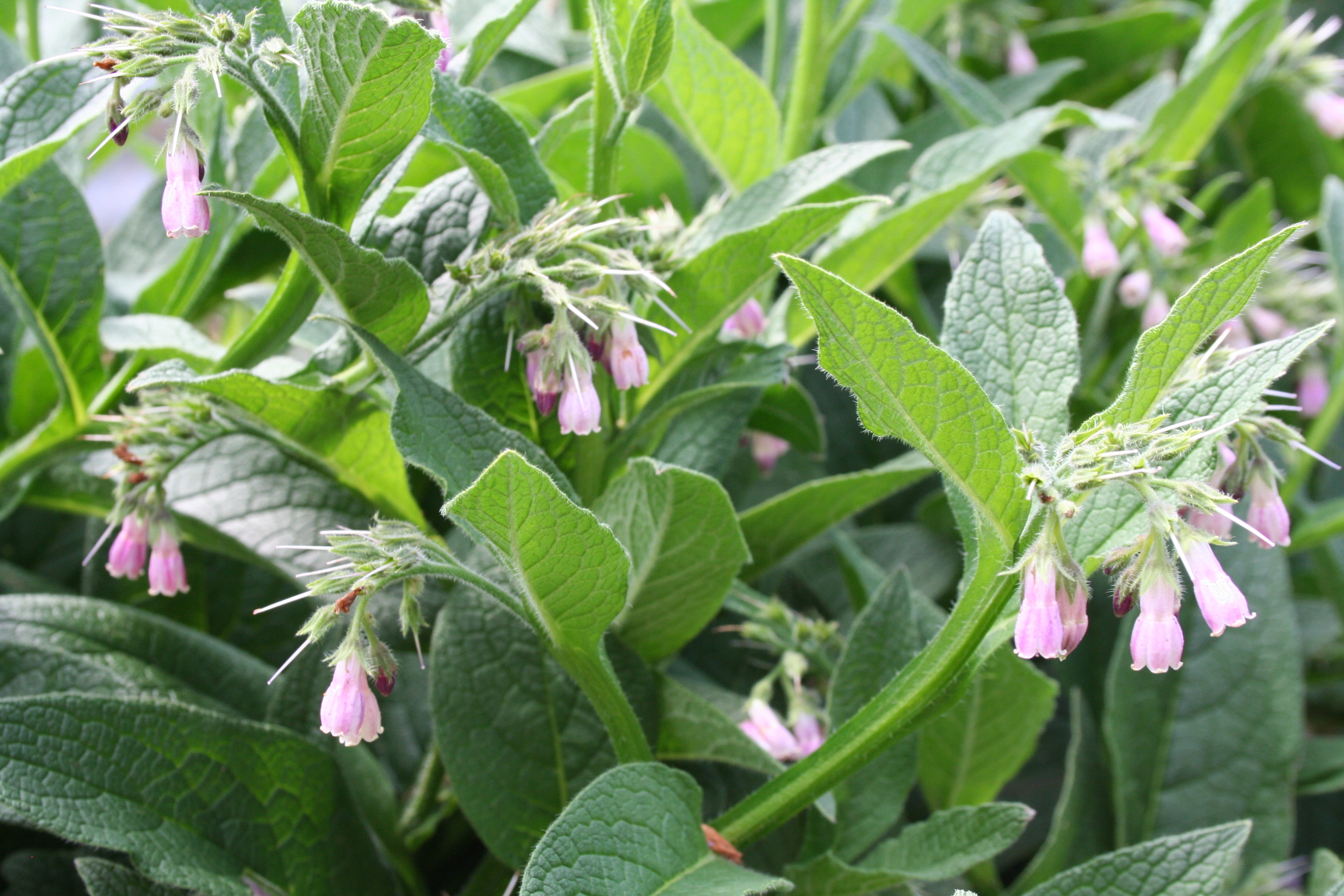
Every gardener should have a comfrey patch, if only to make comfrey tea for their plants.  Comfrey is a fabulous plant with a rich history of use.  It is an important herb for biodynamic gardeners, and can be used to supercharge your compost pile. Comfrey’s leaves are highly textured, and it has exquisite bluebell like flowers that are beloved by pollinators.  It blooms profusely throughout the spring and summer.  Comfrey has a deep taproot and mines lots of nutrients from the soil, then it produces a massive crop of leaves that can be chopped up and soaked in water for a few days to yield a rich (and foul smelling) broth that transfers comfrey’s goodness to your other garden plants.  There is another method of making a comfrey tea concentrate that takes a little longer but does not smell so bad. Here is a link to a page that explains this method well. (https://allotmentnotes.com/2019/05/16/a-simple-and-stink-free-recipe-for-comfrey-tea/)


** Recipe of the Week:
------------------------------------------------------------


** Pumpkin Tea Cake
------------------------------------------------------------

This makes a gorgeous tea cake or dessert cake for these fall days.  I adapted this recipe to have a bit less oil, a bit of sorghum, and a little more volume, to fit well in a long narrow bread pan that I love using for sweet loaf cakes.  To make in a standard loaf pan, scale it back down or revert to the original recipes I have linked below.

2 tsp baking powder

1 scant tsp baking soda

2 heaping TBSP cinnamon

1 heaping TBSP nutmeg

1/2 tsp cloves

2 1/4 cups canned or cooked pumpkin, or winter squash (hubbard and cushaw both work well)

1 c avocado oil

1 1/4 cup sugar (I know, but it is cake)

1/2 cup sorghum (or just more sugar)

4 eggs

2 heaping cups flour

pepitos

sugar for sprinkling on top

Preheat oven to 325*F.  Press your soft cooked pumpkin or squash tightly into your measuring cup, making sure you aren’t leaving big air pockets.  Turn it into a mixing bowl and add all the dry ingredients except the flour, and mix well in your electric mixer, until the ingredients are blended and the pumpkin is well mashed.  If making this by hand, you’ll have to do some mashing.  Add the oil and eggs, blending well.  Lastly add the flour, incorporating about a third of it at a time, and not overmixing.  Transfer the batter into a greased and floured loaf pan lined with parchment paper.  Top generously with raw, unsalted pepitos and a generous sprinkling of sugar. Bake until a toothpick inserted in the center of the cake comes out clean.  Time will depend on your oven and the pan you choose to use.  This would make good muffins, too, but I have no patience for muffins any more.

Incidentally- pepitos are a great topping in place of tree nuts like pecans or walnuts, for those of you who may be accommodating someone’s tree nut allergy.  I enjoy adding them to our homemade granola, and to overnight oats or yogurt and fruit parfaits.

About my pan, I found it at a yard sale many years ago, but I noticed King Arthur Flour sells a similar pan which they call a Pullman Loaf Pan, and yet another they call a Tea Loaf pan, and they are having a sale right now, so (https://shop.kingarthurbaking.com/pans/bread) …BUT, this recipe would be good in any pan you already have, too, just adapt it to scale, or use one of these versions:

You may run into a paywall with the original recipe I used at Bon Appetit (https://www.bonappetit.com/story/pumpkin-cake-never-fail)

This recipe at serious eats is about the same, I believe (https://www.seriouseats.com/pumpkin-tea-cake-recipe) .

We will be open Wednesday, October 16, from 10am-noon.  We are well stocked with a variety of natives and herbs that will thrive with fall planting.  Come see us!
First Sent October 1, 2024 Rain and Rosemary Bread
Hello, friends. I recently committed to send out a newsletter every week, but I have really struggled with what to say right now  Our home and farm are fine, our family is safe, but some of our favorite places are devastated and the people in and around them are struggling.  We feel it deeply and want to help where we can, and we know many of you do, too.

Personally, I’m planning to help out at our church’s clothes closet.  Now would be a great time for you to clean out your closets and take your clean, unwanted clothing to an organization that will give, not sell, them to those in need- a clothes closet or the Salvation Army. (yes, the Salvation Army does sell clothing, but they also give clothing to people in need.)  Our clothes closet is at St. Michael’s Episcopal Church (formerly St. Christopher’s), in Colonial Heights, if you are looking for a good one to support.  Bagged or boxed clothing, household items, toys, and medical equipment (walkers, bedside commodes, etcetera), may be left at the church in the covered alcove to the far end of the parish hall.  There are many other organizations that are in our communities that will need extra help as the long recovery process begins.  Second Harvest Food Bank is an especially great local resource you can support with money or time.

At this writing, our plan is to be open by appointment only this week and next, through October 12.  We welcome those of you who want (or NEED) to shop for plants to text (preferred) or call Christy at 423-348-6570 and let us know when you’d like to visit. (Evenings are fine, too. Don’t be shy!  We want to have you here, we just need to be a little more flexible right now.) We plan to resume our Wednesday-Saturday 10-12 (or later) schedule from October 16-26.

Our nursery plays a small part (its easy to slip into feeling especially insignificant at a time like this) in rewilding our area- helping to preserve biodiversity and resilience in the face of climate change, development, and invasive plants, bugs, and diseases.  But we also hope that we help you make your world more beautiful, and at a time like this, we can all use more beauty and hope.  So, here is a little plant profile and that Rosemary Bread recipe I promised last week.


** Much love- Christy
------------------------------------------------------------

https://gnps.org/rudbeckia-laciniata/

Elephant's Foot (Elephantopus tomentosus)

is a sweet little plant that grows in the many wild borders between sun and shade at the farm.  The unusual name refers to the big basal leaves that lie flat to the ground.  These leaves tend to crowd out weeds and give Elephant's Foot potential to function as a low growing groundcover in sun to partial shade situations.  One online resource says that Elephant's Foot is too aggressive to use in cultivation, but I photographed this beautiful mass of it at the Botanical Garden in Asheville, making an excellent edge along a semi-shaded pathway.  Pale, purplish-pink flowers dance above the foliage atop 12 to 18" tall stems. Consider planting it along pathways and woodland edges where you'd like to cover bare soil. For a little more information on Elephant’s Foot, explore here:  https://gnps.org/rudbeckia-laciniata/


** Rosemary Bread
------------------------------------------------------------

This recipe is adapted from one called Dilly Casserole Bread that was submitted by Katty Harrison and Jo Ann Chamberlain to the community cookbook printed many years ago by First Broad Street Untied Methodist Church in Kingsport.  It works great as rolls, or as two standard loafs.

4 tsp yeast, 1/2 cup warm water, 2 T. Butter, 2 cups cottage cheese, 4 T sugar, 2 heaping T dried rosemary (or a greater volume of fresh), 2 t salt, 1/2 t baking soda, 2 eggs, 5 cups flour (may be a good all purpose flour, or 3 cups all purpose and 2 cups bread flour).

Mix yeast in the warm water in a small bowl.  Gently warm the butter and rosemary on low heat.  Blend cottage cheese in a food processor or use a stick blender, until smooth, then add to the butter and warm to about 110 degrees.  Mix all the other ingredients except the flour in a large bowl and add the cottage cheese mixture and yeast water and mix well.  Begin adding the flour, one cup at a time, and stir well between additions.  I work the flour a bit at this stage and tend to add about a half cup more flour to the bread to stiffen up the dough, but you don’t have to, you can leave it very soft.  Cover the bowl with a damp tea towel and let rise until it doubles in size.  Divide and form into two loaves and place into well greased loaf pans.  Let rise until doubled again, then bake at 350* until golden brown (25-30 minutes)

We will be open by appointment for the next two weeks, then hope to resume posted hours through October 26.  We are well stocked with a variety of natives and herbs that will thrive with fall planting.  Come see us!
First sent Sept 24, 2024 Tomato soup and planting boxes
Its happening!! I was so excited to pull up to my house yesterday and see our hauling trailer loaded down with lumber to build our new air-pruning boxes. For years, we have been starting trees and shrubs in a variety of pots, which is a bit limiting because you have to remove the seedlings from the pots before their roots start to spiral around in the container. I’d prefer to leave them growing together longer, to benefit from the effect that competition has on plants. You see, plants that are growing close to one another can sense the presence of competitors, and they grow much faster in response. These air pruning boxes will have metal mesh bottoms which will cause the roots that reach them to focus on spreading out rather than spiraling around. This will make really well rooted plants, and allow us to let our seedlings grow together longer, thus sizing up faster. They will also have built-in protection from those pesky rabbits and other marauders. Our hope with this system is to be able to produce high quality starts of locally sourced trees and shrubs at price points that will allow our customers to plant in quantities for larger scale rewilding projects and home projects like mini-forests and all native hedgerows. We may also be able to sell bare root plants directly from the planters- digging to order and sending you home with a wrapped up bundle of plants ready to go into your prepared holes. (Don’t worry, we will always have pre potted, container grown plants as well, for those of you who might keep them a while before planting. We know who you are and what you do.) Philip and Creighton will be the muscle and the brains behind building these boxes and setting up our new growing area, so here is me publicly thanking them. **
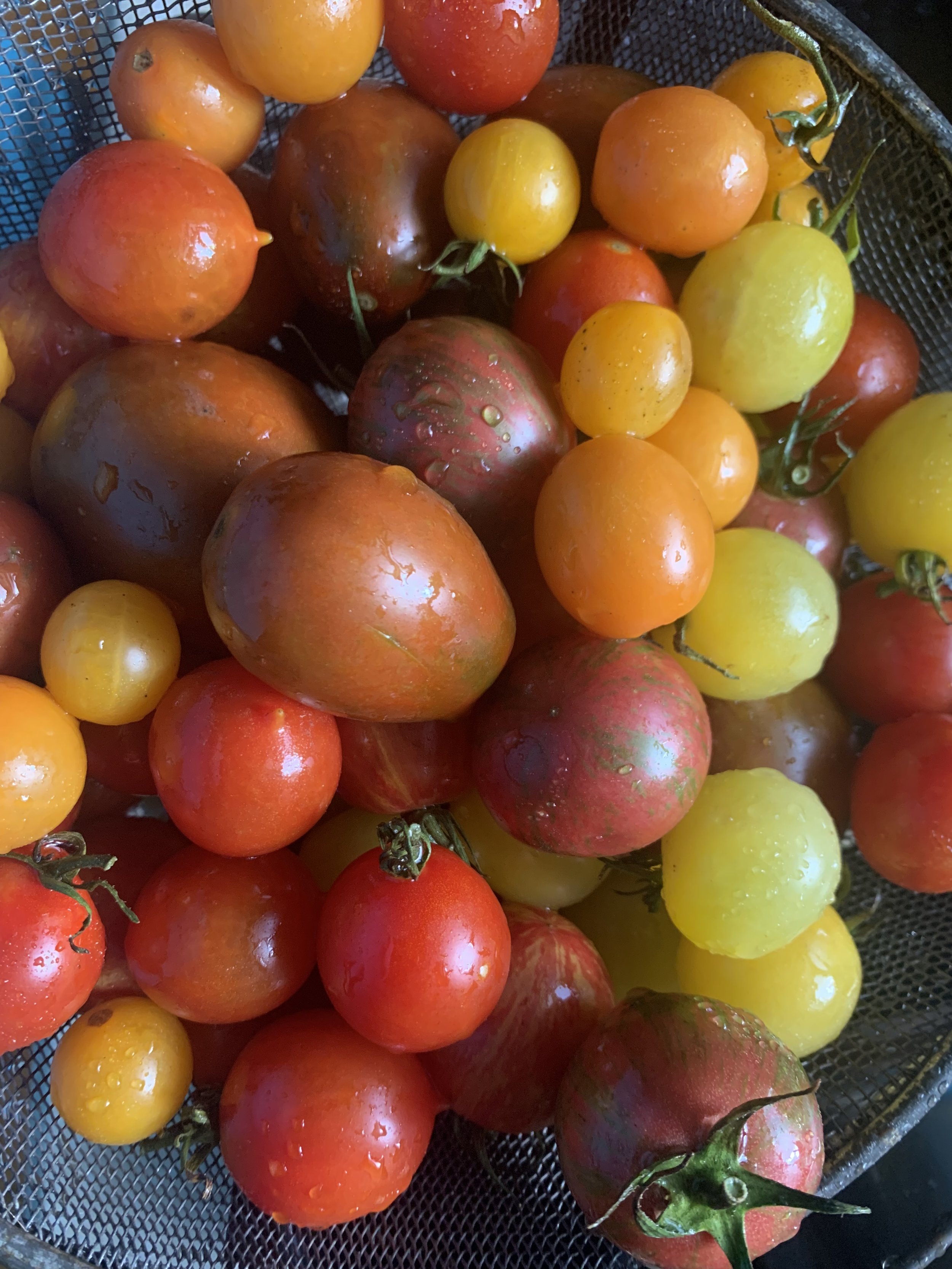
Roasted Tomato Soup ------------------------------------------------------------ This is a quick and easy way to use a lot of tomatoes, and now is a great season to enjoy soup and a sandwich. Start with enough vegetables to make a single layer on a large roasting pan. I usually use a combination of large and small tomatoes, an onion, a few cloves of garlic, a couple of small sweet peppers, and one to a few small mild chiles. Seed the peppers, crush the garlic with the handle of a knife and remove the skin, and chunk up everything to be around the size of your cherry tomatoes, which you will leave whole. Drizzle all generously with olive oil, and sprinkle with salt and pepper. Roast at 400* for 20 minutes or a little more, until the onion starts to singe and the pan juices are browning but not burning. Remove from the oven and transfer carefully (using a large spoon to get most of it) to a food processor or blender. Scrape up the pan juices as well to capture all that flavor. Blend until smooth, tomato skins and all. Add fresh or dried herbs to taste. My favorite herbs for this soup are basil, parsley and lovage. Thin with milk, half and half, or cream if you wish (all so good), and season to taste. Bon appetit! Next week I will share our Rosemary Bread recipe, which makes the most excellent sandwiches to go with your favorite soups. We will continue to be open Wednesday- Saturday from 10-2 through October 26. We are well stocked with a variety of natives and herbs that will thrive with fall planting. Come see us!
First sent September 18, 2024
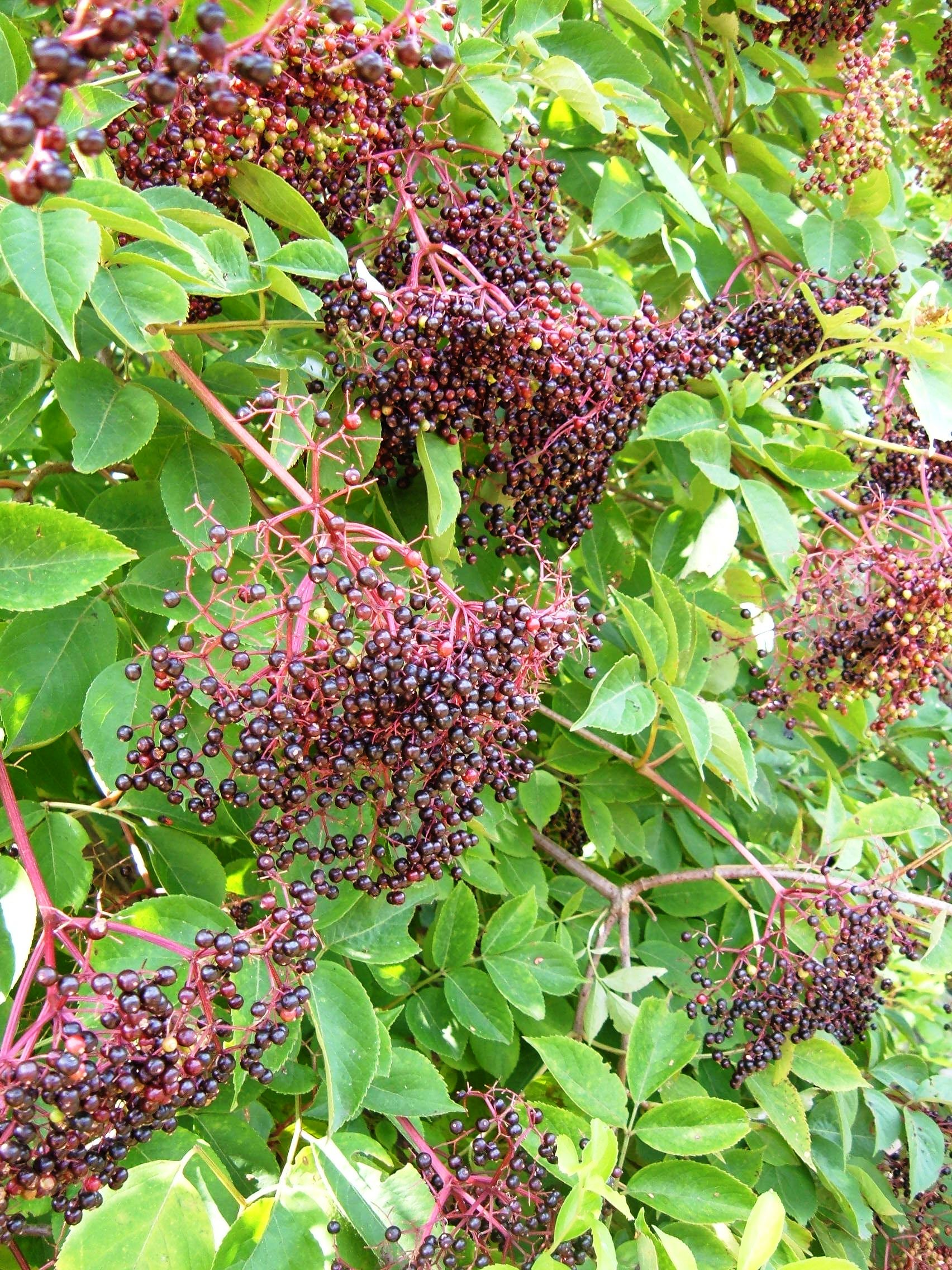
We have spent our summer propagating the native plants of our region and saying goodbye to 7 of our 8 beautiful puppies (Dutch will stay with us, although he is still learning to be a a better friend to the chickens). As I type this, it is cool and gently raining, and starting to feel like it really may be fall soon. We are open Wednesdays - Saturdays from 10-2 through October, and hoping that the cool temps will continue for the duration (wishful thinking?) Creighton and I have made a commitment to grow 90% of our woody plants from locally sourced seed or cuttings by our 25th season, and we are well on our way. We have several local varieties available this fall and more coming along for spring. Three of our locally sourced offerings produce fruit that you and your wild friends will enjoy- American Plum, Pawpaw, and Elderberry. Last year Creighton found a large stand of American Plum in a fencerow on the farm and we cleaned and sowed the seed and made a batch of beautiful, jewel toned jam. The seed sprouted this spring and the seedlings have bumped up to 3 quart pots already. The pawpaw is from our favorite secret pawpaw stand in Sullivan County. We ate the pulp, mostly in smoothies, and cleaned the seed. We kept the large seeds in the refrigerator until late winter to protect them from hungry critters, then sowed them in the greenhouse, eventually placing them in a shady spot outside, where they have flourished. They seem to grow more every week. They are also in 3 quart pots, a good size that is easy to plant and quick to establish. Our locally selected “Pilgrim” Elderberries are vigorous and fast growing plants that can grow into a hedge or seasonal screen in just a couple of seasons. Our mother plant produces plenty of berries for us and the birds. We have these and other Elder varieties in assorted sizes. https://www.shyvalleyfarm.com F
all is almost here and with it COLOR. Here are some of our favorite plants to light up your landscape in autumn. Black Tupelo (Pictured above) An excellent mid sized tree with great color and bird friendly fruit Spicebush- brilliant yellows leaves and as a bonus the female plants will bear bright red berries Witch Alder (Fothergilla)- all the colors, often at the same time on the same plant- leaning toward red and purples. We have both the Dwarf and the largest species in stock for fall. Bluestar- Arkansas Bluestar is famous for its glowing golden fall color, but all the bluestars are attractive this time of year Beautyberry- Chartreuse leaves fall about as quickly as they change color, but the clumps of magenta berries linger a long time. Native grasses- Switchgrass, Little Bluestem, Muhly Grass, and Splitbeard Bluestem look especially beautiful in Fall Oakleaf Hydrangea continue to impress this time of year with deep rich leaf color and flower clusters that have aged to a rich chocolate brown Southern Bush Honeysuckle- (Diervilla)- Already robed in a splendid kaleidoscope of color, this plant is a great, wildlife friendly, shrubby filler plant. Asters, goldenrods, and Ironweeds will still be blooming this time of year and are important, high quality forage for our native bees and butterflies that may still be active. Pictured below is one of the Aromatic Asters, probably our favorite species for the landscape. https://www.shyvalleyfarm.com I’ve set a goal to send short, more frequent newsletters. So you should hear from us again soon. Until then, take time to enjoy the little things. Fondly~ Christy P.S. A last parting shot of our puppy Cooper at 21 weeks. He is living the good life on a big farm nearby, with a pond and lots of buddies who love him.
Sent as our first newsletter , February 14, 2024
** Native Plants are our Passion ------------------------------------------------------------ Happy Valentine’s Day! We are looking forward to a great 23rd growing season and are so excited to share our updated plant lists with you. We have several new species and some cultivars we are offering for the first time this year, and of course, lots of native plants propagated in house with seed or cuttings we collect throughout our beautiful region. Visit Shy Valley Farm Online (https://www.shyvalleyfarm.com/) ** New Additions to the Nursery for 2024 ------------------------------------------------------------ It is incredible that after 30 years of growing native plants, there are still new plants to discover. We specialize in natives, but is that really a specialty? We grow trees, shrubs, wildflowers for sun and for shade, ferns, grasses, sedges, including lots of perennials and even a few native annual plants. You’ll find plants for almost any type of growing conditions you are likely to encounter in our region. When you consider this diversity, it’s maybe not that hard to imagine finding new landscape worthy plants every year. Here are two of several we are trialing for the first time this year. Cupid’s arrows will take flight when you see these beauties. Appalachian Mountain Mint. Just when we thought we had trialed all the mountain mints, we found another. If you are unfamiliar with Mountain Mint, you really should try some this year. MOST of the species we grow are very well behaved, easy, adaptable, and long lived perennials that bring the pollinators in droves, while adding lovely texture to the landscape. I was delighted to find a new-to-me species to trial this season. Appalachian Mountain Mint, or Pycnanthemum flexuosum, has more globe-like flowers than other Mountain Mints. The plants are 2-3 feet tall and spread at a moderate pace to about 4 feet wide. Like the other mountain mints, they prefer full sun, moist to average soil. and are highly deer resistant. Foliage is clean and aromatic. The pycnanthemums are butterfly host plants in addition to attracting a wide array of tiny, gentle bees and wasps. Most of them can work well in traditional landscapes or herb gardens, and all are great for naturalizing, bloom over a long season, and provide winter interest as well. For photos and more information on Appalachian Mountian Mint, visit this link. (https://fsus.ncbg.unc.edu/show-taxon-detail.php?taxonid=5394) We should have it available in quart pots for $10 by mid-April. Starstruck Bluestar. We grow several members of the Amsonia (Bluestar) genus, most of them straight species which we grow from seed. It is such a great group of plants that we are always willing to try a new one. Starstruck is a new cultivar that sports the dark stems of the very popular Storm Cloud, but on a more compact frame with later bloom time. Grows 32-38” tall. Like all the Bluestars, Starstruck blooms in early to mid spring, has gorgeous foliage that looks great all summer and turns shades of yellow in fall. All the Amsonias are highly deer resistant and adapted to full sun/ partial shade. They tolerate a range of moisture, even thriving in rain gardens. Incidentally, we will also have Storm Cloud Bluestar again, and this year, it is the Perennial Plant of the year, which is well deserved recognition for this genus and for Storm Cloud specifically. As far as wildlife value, native bumblebees adore the bluestars, and the literature also says they attract hummingbirds and butterflies, although we don’t see that at the farm. For a look at Starstruck Bluestar, check out this review. (https://www.missouribotanicalgarden.org/PlantFinder/PlantFinderDetails.aspx?taxonid=443892&isprofile=0&) More mature plants may be seen online as well. We should have these in 2 gallon pots this spring. What is a cultivar? Cultivar is shorthand for “cultivated variety”. These are plants selected for some outstanding trait, then propagated to preserve that trait in future generations. Our philosophy at Shy Valley Farm is that local ecotypes are always best, but most native cultivars are no worse than straight species plants with far flung genetics that could dilute the local gene pool. Provenance matters with native plants, and we appreciate your commitment to gardening with plants that will preserve local ecotypes for generations to come. We also delight in placing any habitat building native plant into local landscapes and getting people who are new to habitat gardening to use natives. If cultivars help open gardeners up to the idea of choosing natives over exotics, we are all about it. There are different opinions on these subjects, but we will always label plants properly so you’ll know what you are getting. For updated plant lists for 2024, visit us online. Visit Shy Valley Farm Online (https://www.shyvalleyfarm.com/) April 3 is opening day for our 2024 season We always look forward to reopening in the spring, but this season we are more excited than ever for you to meet our plants and see all the improvements around the nursery. With our son Creighton rejoining us this year, we will be able to expand our hours relative to last year, take on select landscaping projects, and make improvements around the farm. We are planning to be open Wednesday through Saturday, from 10am to 2pm each day. We will also have a couple of special events during the season, so stay tuned to your next newsletter and our website for details. The only off site sale we have planned for 2024 is the Exchange Place Spring Garden Fair the last weekend of April. We will have a limited selection of our plants at Exchange Place again this year, so shop at the farm for best selection. As always the very best way to contact us is via text to 423/348-6570. Text us to place advance orders, or schedule an appointment for a landscape consultation. ** Herb Corner ------------------------------------------------------------ The herbary at Shy Valley Farm is a favorite place for many of our customers, and is where you can find a wonderful assortment of culinary and medicinal herbs grown without harmful chemicals. This season, with healthy mocktails trending, why not plant a mocktail (or cocktail, as the case may be) garden? Some of our top picks for beverages of all stripes are Lemon Balm Lemon Verbena Lime Balm Baha Basil Dark Opal or other Purple Basil Rosemary Blue Balsam Mint Ginger Mint Pineapple Sage Stevia Lavender One endearing facet of herb gardening is that we get to enjoy our herbs as the beautiful plants they are, then benefit from their flavor and aroma when we use them. This being February, let me share with you a simple sort of beverage; a warm, wholesome mug of goodness that will make you feel oh so toasty on these cold dark nights. My dear friend Susan taught me this one, and she calls it…. Rosemary Milk Measure your milk of choice by filling the mug you plan to drink from, then pour that mug of milk into a small cooking pot. Add a 3 inch sprig of fresh rosemary or a generous pinch of good quality dried leaves, and heat gently to a low simmer. Cook gently a few minutes, no boiling, covered. Turn off the heat, remove the fresh sprig, or strain out the dried leaves as you transfer the milk back to your mug. Add honey to taste, and enjoy in a comfy chair with a good book at hand. This and a few other beverage recipes are on the Shy Valley Farm website under the Education tab. Visit Shy Valley Farm Online (https://www.shyvalleyfarm.com/) ** Appalachian Habitat Alliance ------------------------------------------------------------ 2024 marks the transformation and reemergence of a local non-profit organization dedicated to supporting and inspiring people throughout our region to reestablish native habitat through restorative landscaping with native plants. Formerly known as “What’s the Buzz Johnson City”, Appalachian Habitat Alliance, or AHA, will promote native habitat projects through building awareness, educating on sustainable practices, and inspiring action through example. Visit the AHA website for guides to native habitat gardening written by local gardeners, and much more. (https://www.apphabitatalliance.org/) You may sign up there for the AHA newsletter, bringing articles and a list of upcoming events of interest to your inbox six times per year. ** Until Next Time ------------------------------------------------------------ Hoping all good things for you and yours. This is the season when we have rested a bit, and are beginning to feel the irresistible pull of the garden once again. Take time to to admire the winter beauty of nature and your landscape, even as you begin the love labor of preparing the garden for spring. In honor of the spirit of St. Valentine, we leave you with some words on love from the author or Braiding Sweetgrass and Gathering Moss